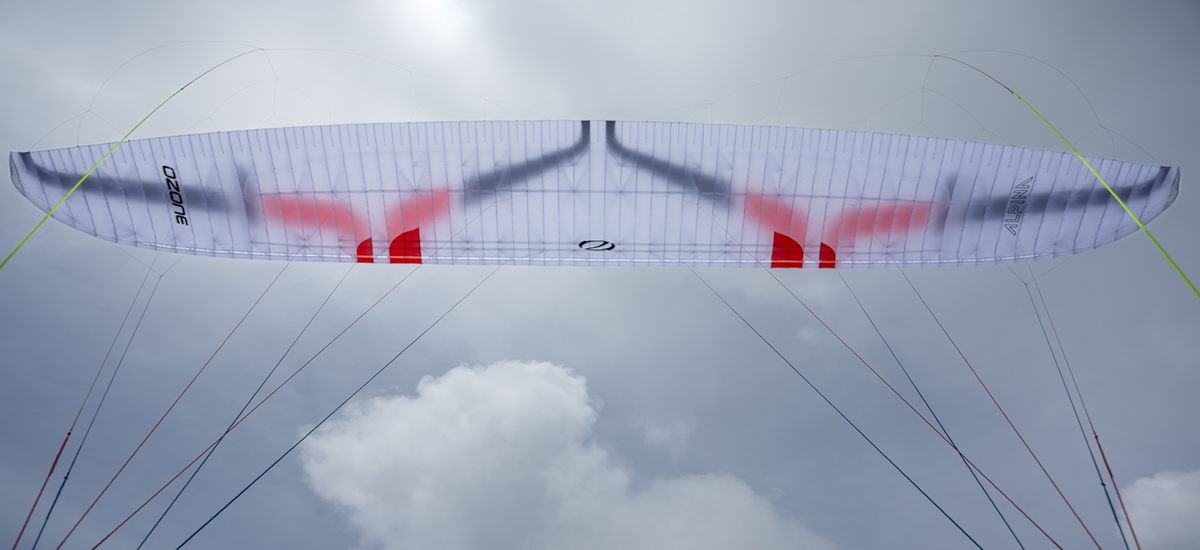
Ozone Alpina 5
The lightweight XC machine for ambitious pilots!
For my vacation, I packed the new Alpina 5. The main goal of the trip was one thing above all: relaxed flying with plenty of fun.
That’s exactly why the new, straightforward C two-liner from Ozone seemed like the right choice to me.
The flying conditions could hardly have been more varied. Everything was there, from very weak thermals to large, powerful cores. The occasional bout of turbulence didn’t take long to appear either. Thanks to the many other C and D wings in the air, there were also good opportunities for comparison. And after just over 20 hours of airtime, I had formed a solid impression of the wing—enough to be able to write a proper test report.
The Technology
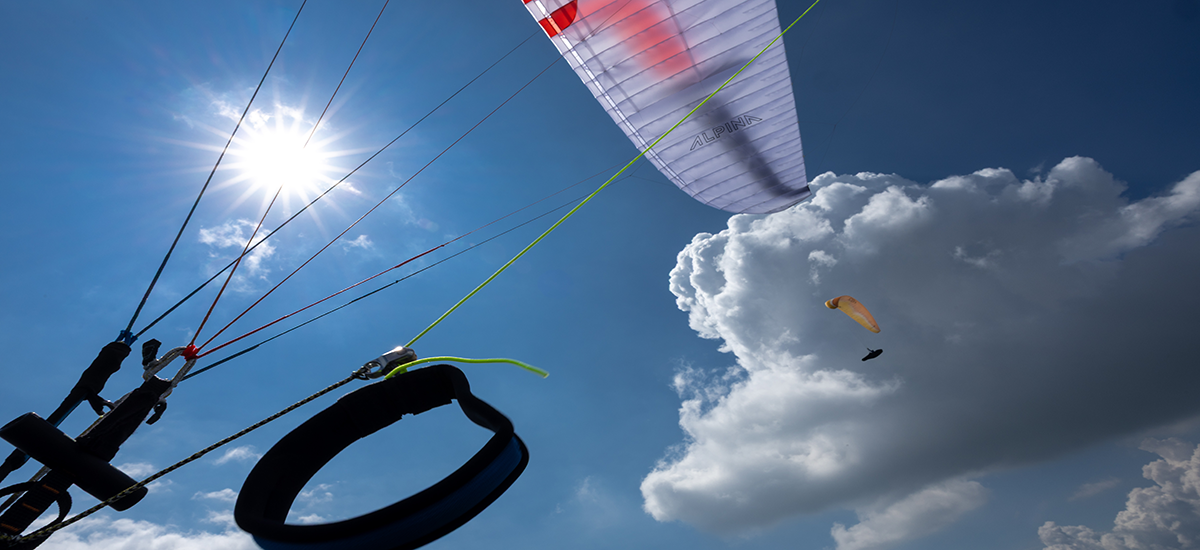
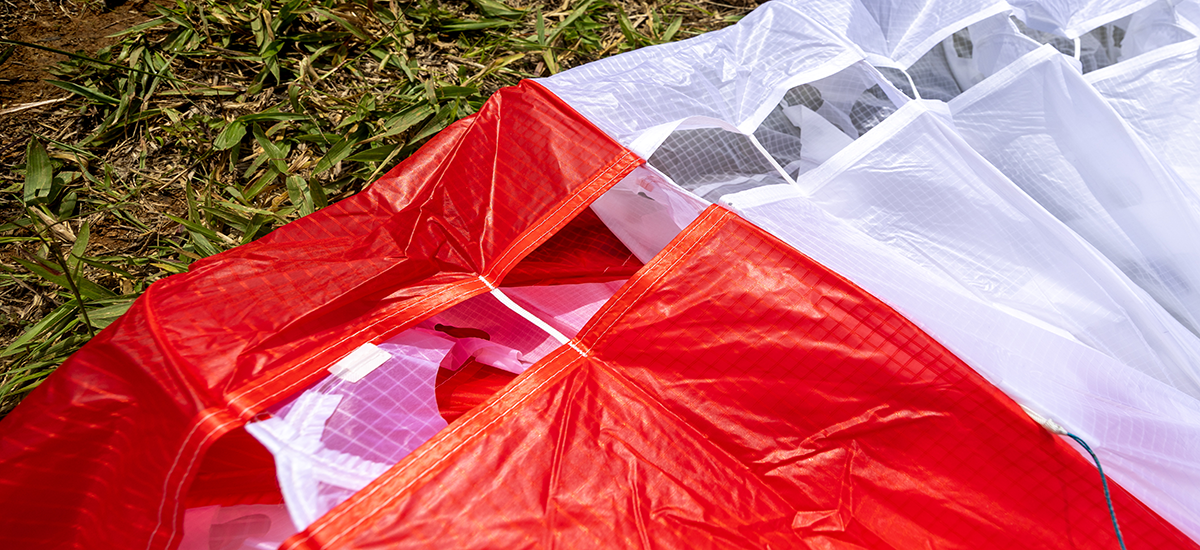
The Alpina 5 is consistently very well made. Ozone uncompromisingly uses top-quality materials, including aramid lines throughout the entire line set, which promises a long service life with stable trim. In size L, the wing weighs 4.45 kg, which is impressively light for a glider of this size.
I flew the Alpina at around 5 kg below the maximum all-up weight, which turned out to be a very well-balanced choice.
From Takeoff to Landing
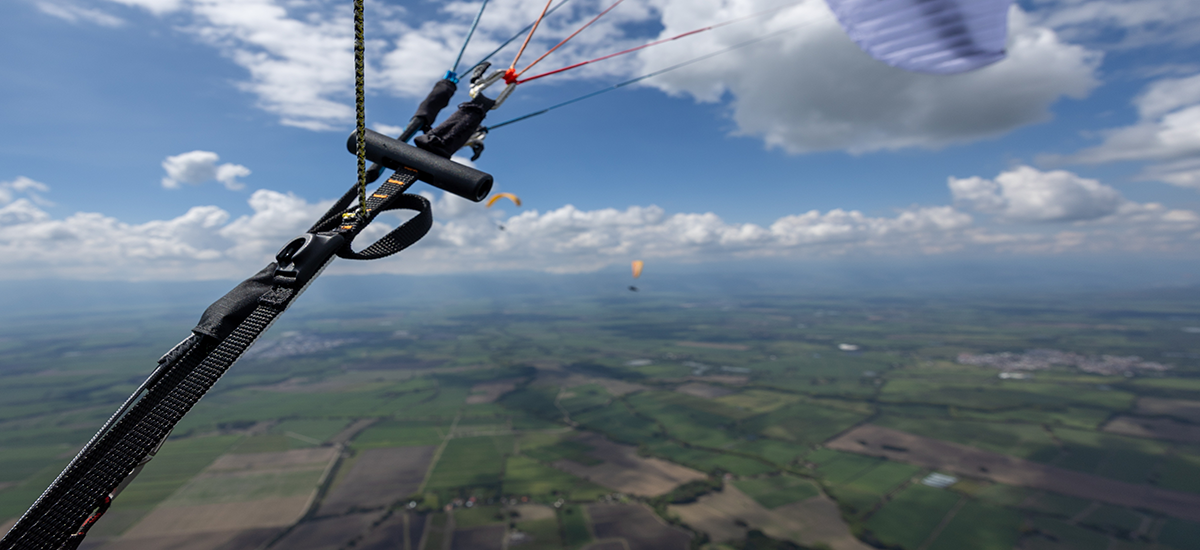
On launch, the Alpina 5 shows no unusual behavior. It rises cleanly and in a controlled manner, without overshooting. The wing inflates evenly across the entire span, and with a light brake input it can be easily checked overhead—the rest then follows almost by itself.
In the air, long-time Ozone pilots will feel right at home immediately. The compact, stiff wing inspires a great deal of confidence. Unlike the Photon, the brake lines are just the right length and feature a short, clearly defined dead travel.
The handling is precise: the wing does exactly what you ask of it. Brake pressure is relatively high, and it takes a noticeable amount of force to reach the stall point. However, this is by no means a negative aspect—it actually provides additional feedback and a greater sense of security.
In weak thermals, the Alpina climbs well, and in strong cores it almost centers itself. In turbulent air, the wing really plays to its strengths thanks to its compactness and stability.
In glide, especially when flying accelerated, the Alpina remains very stable. It can be controlled easily and effectively using the B-handles. Up to about half speed bar, there is hardly any noticeable difference compared to the Zeolite or Photon—precisely the speed range in which most pilots will likely feel at home on their cross-country flights.
Without deliberately flying safety-relevant maneuvers such as collapses or stalls, I would generally rate the wing as very manageable. A larger collapse that occurred during a brief lapse in concentration was handled effortlessly by the Alpina, and the open side of the wing could be controlled precisely.
The spiral dive is easy to initiate and delivers strong sink rates without building up excessive G-forces. Big ears are also easy to apply and show a reasonable level of effectiveness.
Conclusion
The Alpina 5 is a compact, very stable wing that inspires a high level of confidence and does exactly what the pilot asks of it.
From my point of view, the brake pressures could be a bit lighter, but apart from that, the wing is an absolute success.
We recommend the Alpina 5 to pilots who fly a lot, appreciate performance, and still value an extra margin of safety. Despite all the praise, it’s important to keep in mind that this is a true high-performance wing. Appropriate experience is therefore essential — ideally including safety training on a three-liner high-B or C-class wing.
We have all sizes available in our shop, ready for your test flights. We look forward to your reservation!
Join the Adventure!